
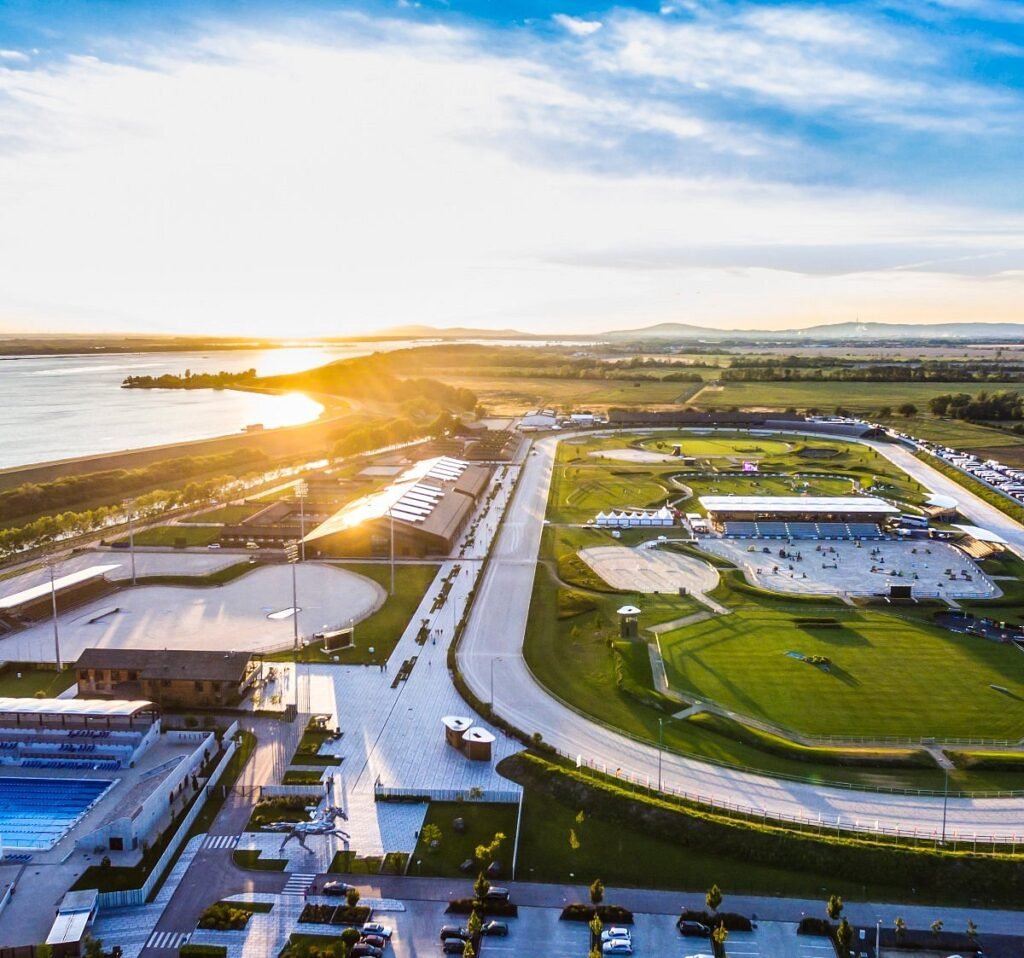
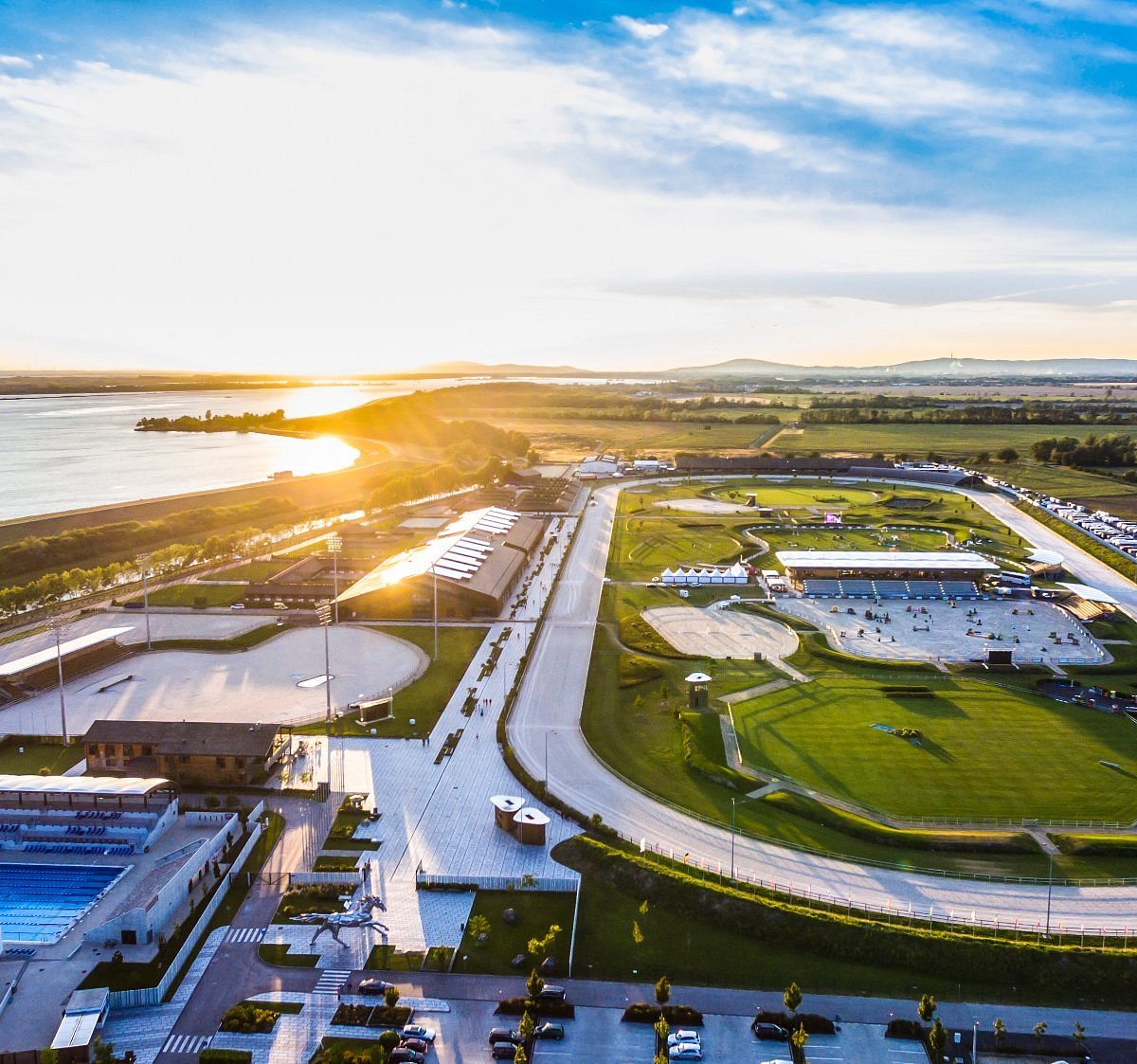
A swim camp Slovakia trip to X-Bionic Sphere takes your club to one of the most complete training complexes in Europe. Located on the banks of the Danube, about 20 kilometres from Bratislava, 60 kilometres from Vienna and 120 kilometres from Budapest, the facility attracts national teams, clubs and elite athletes from all over the world.
This guide walks through the complex, the hotel and the swimming facilities in detail.
Swim camp Slovakia at a Glance
Here are the key facts for a swim camp Slovakia trip, so you can compare it quickly with other training camps:
- Accommodation: 4-star hotel
- Training: 25-meter and 50-metre pool
- Meals: Full board
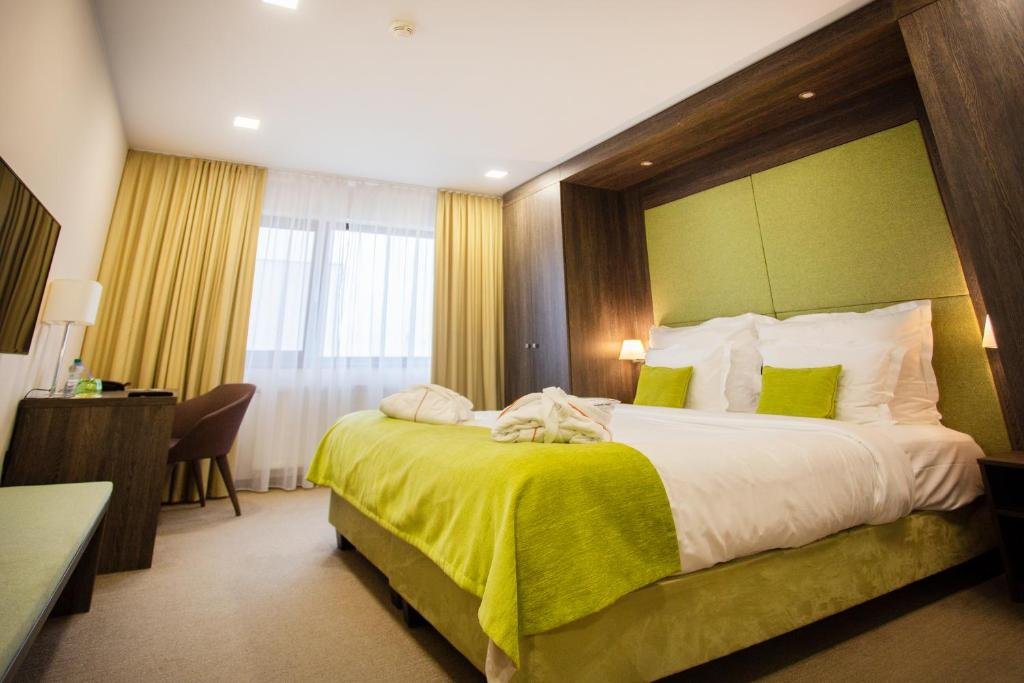
- Accommodation: You will stay at the modern X-Bionic Hotel, located in the heart of the sports complex. It offers bright and fresh rooms with two separate beds, plenty of storage space and stylish bathrooms. The hotel also has:
- Price: on request, depending on dates, group size and room types
What Is X-Bionic Sphere?
X-Bionic Sphere was inaugurated in 2016 and covers more than 1,000,000 square metres. It has arenas and training areas for 27 Olympic sports, together with a newly built hotel of a high standard.
Beyond swimming, the complex includes a top-class athletics facility with throwing cages and an inclined sprint track, a FIFA-standard football stadium with natural grass and seating for 5,000, and a three-storey gym with elite equipment for all sports.
The Swimming Facilities
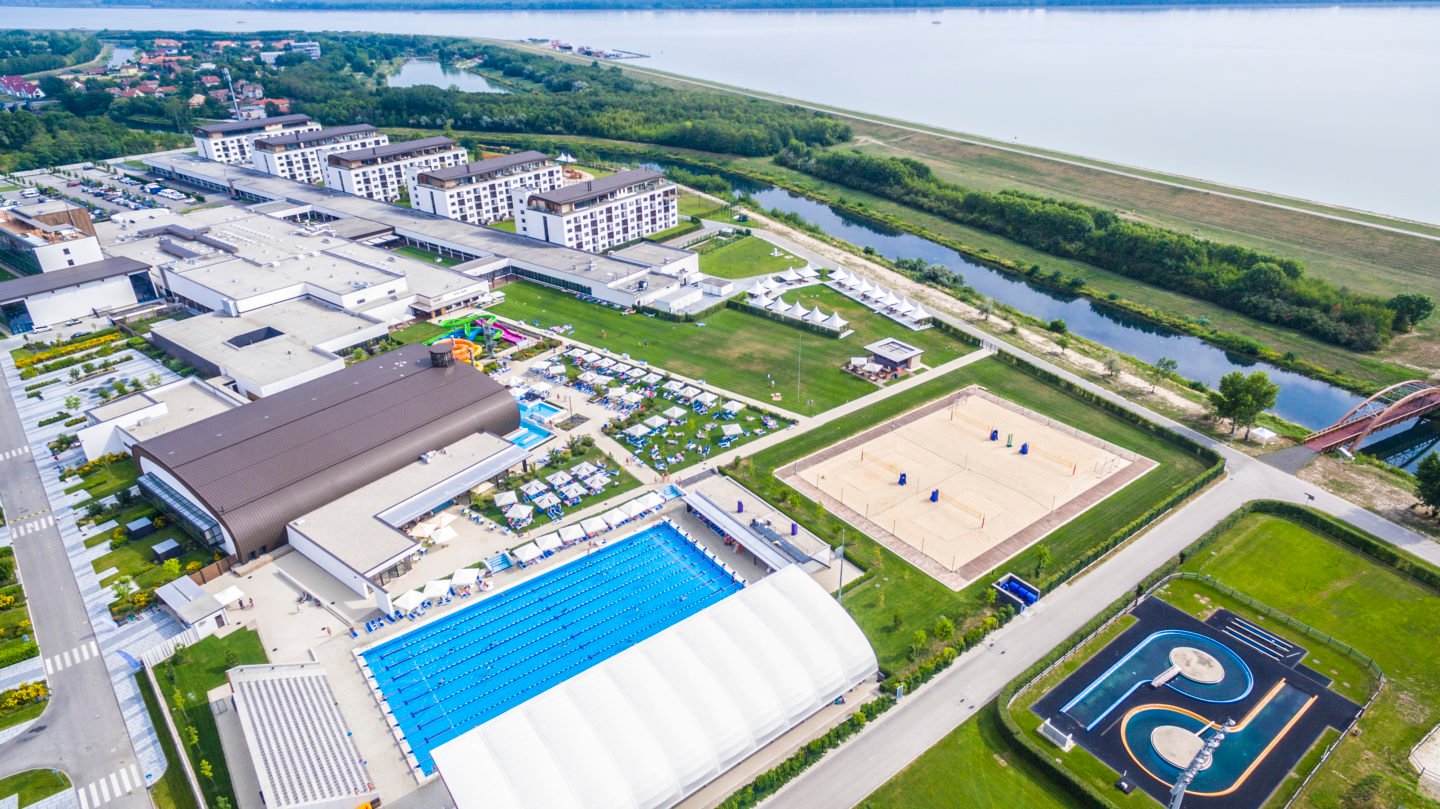
The heart of the swimming offer is a newly built 50-metre outdoor pool with ten lanes, an Omega timing system and a large grandstand. It is heated from April to mid-October, which gives long seasons with optimal conditions for training and competition preparation.
There is plenty of space around the pool for warm-up and recovery, which keeps sessions efficient. For year-round work, a 25-metre indoor pool, also with timing and spectator stands, complements the outdoor pool, so training can continue whatever the weather.
A large water park is also on site for relaxation, which younger swimmers especially appreciate after a hard day.
Strength and Dryland at the Three-Storey Gym
The state-of-the-art gym is within walking distance of the pools. Swimmers can combine water sessions with strength, power and mobility work without any transfers, which is ideal for clubs that want to build a complete training programme into the week.
Staying at the X-Bionic Hotel
The group stays at the modern four-star X-Bionic Hotel in the heart of the complex. Rooms are bright and fresh with two separate beds, plenty of storage space and stylish bathrooms.
The hotel has four high-standard restaurants, a large spa and wellness area, a conference centre and cinema, as well as bowling, billiards and a bar for relaxing after training. Full board is included, and everything is within walking distance of the training facilities.
Dryland Ideas That Need Little Equipment
Not every destination has a big gym, and you do not need one for useful dryland work. Short, focused sessions before or after the water keep swimmers strong and reduce the risk of shoulder problems.
- Activation with resistance bands before every swim: external rotations, pull-aparts and scapular work.
- Core circuits: planks, side planks, dead bugs and hollow holds.
- Mobility for thoracic spine, hips and ankles after the afternoon session.
- Light jumping and skipping for younger groups to build coordination.
Keep dryland to 20-30 minutes so it supports, rather than competes with, the water training.
Team Building Between Sessions
A swim camp is also one of the best ways to bring a squad closer together. Swimmers who train in different lanes at home spend a whole week sharing meals, rooms and long sets, and that shared effort builds loyalty that lasts through the season.
Plan one or two short group activities that fit around the training rather than competing with it: a walk through the old town, a beach session with games, or a team dinner with a small awards ceremony at the end of the week. Let the older swimmers lead some of the activities, which builds leadership in the group.
Keep the activities short and low in intensity so that they support recovery rather than add fatigue.
Coach Checklist Before Departure
Good preparation at home makes the camp itself far calmer. Before you travel, agree on goals with swimmers and parents, and make sure that everyone understands that a swim camp is a training trip first and a holiday second.
- Confirm pool times, lane numbers and whether the pool is long course or short course on the dates you travel.
- Plan dryland sessions that need little equipment: bands, mats and a skipping rope cover most needs.
- Pack spare goggles, caps, fins, paddles and a waterproof whiteboard for set writing.
- Agree on sleep, phone and meal routines so that recovery is consistent.
- Bring a simple first-aid kit and the group’s contact list.
With those basics in place, the coaches can spend their energy on coaching rather than on logistics.
Budgeting and Booking Tips
A swim camp is a big investment for most clubs, so it pays to plan the budget early. Prices depend on travel dates, group size, room types and pool time, which is why most offers are given on request rather than as a fixed price.
- Book early to secure lane time and the best flight prices.
- Compare room options: larger shared rooms often reduce the cost per swimmer.
- Check exactly what full board includes and whether drinks are extra.
- Plan fundraising activities months ahead so that every swimmer can join.
- Ask about travel guarantees and insurance before paying a deposit.
Transparent planning keeps parents on board and makes it easier to repeat the camp next year.
Making the Most of Long-Course Training
For many clubs in northern Europe, the biggest benefit of a swim camp abroad is simply time in a 50-metre pool. Long-course water changes the rhythm of a set: fewer turns, more strokes per length and a much clearer picture of each swimmer’s pacing.
Use the camp to test pace over 50s, 100s and 200s, to film strokes from the deck, and to rehearse starts and finishes in race conditions. Swimmers who usually train short course often discover where their stroke breaks down in the second half of a length, which gives clear targets for the season.
Mix this with technique blocks and relay practice, and the camp becomes both a fitness boost and a learning experience.
More Training Camps and Sports Camps
If you are comparing destinations, take a look at our overview of swim camps in Europe. Clubs that travel with several teams can also explore our football camps and other sports camps. Related guides:
- Swim Camp Coral Bay: Private 50m Pool at Coral Beach Resort
- Swim Camp Costa del Sol: Hotel Cervantes in Torremolinos
- Swim Camp Riccione: Olympic Pools on Italy’s Adriatic Coast
Swim camp Slovakia: Frequently Asked Questions
Where is X-Bionic Sphere?
On the banks of the Danube in Slovakia, about 20 km from Bratislava, 60 km from Vienna and 120 km from Budapest.
What pools are available?
A ten-lane 50-metre outdoor pool with Omega timing and a 25-metre indoor pool with timing and stands.
When is the outdoor pool heated?
From April to mid-October.
Is the hotel on site?
Yes, the four-star X-Bionic Hotel is in the heart of the sports complex.
Final Thoughts
A swim camp Slovakia week gives your group the right mix of quality facilities, full board and a destination that athletes remember. Request a tailored offer with your dates and group size, and start planning a training camp that moves the whole club forward.