
A swim camp Falkenberg trip is the perfect choice for clubs that want long-course training without flying abroad. Falkenberg is a coastal town on the Halland coast between Varberg and Halmstad, and it has become an extremely popular destination for swimming groups.
Here is what you need to know about the town, the pool and the accommodation.

Swim camp Falkenberg at a Glance
Here are the key facts for a swim camp Falkenberg trip, so you can compare it quickly with other training camps:
- Accommodation: Hotel Vesterhavet
- Training: 50 metre indoor pool
- Meals: Full board
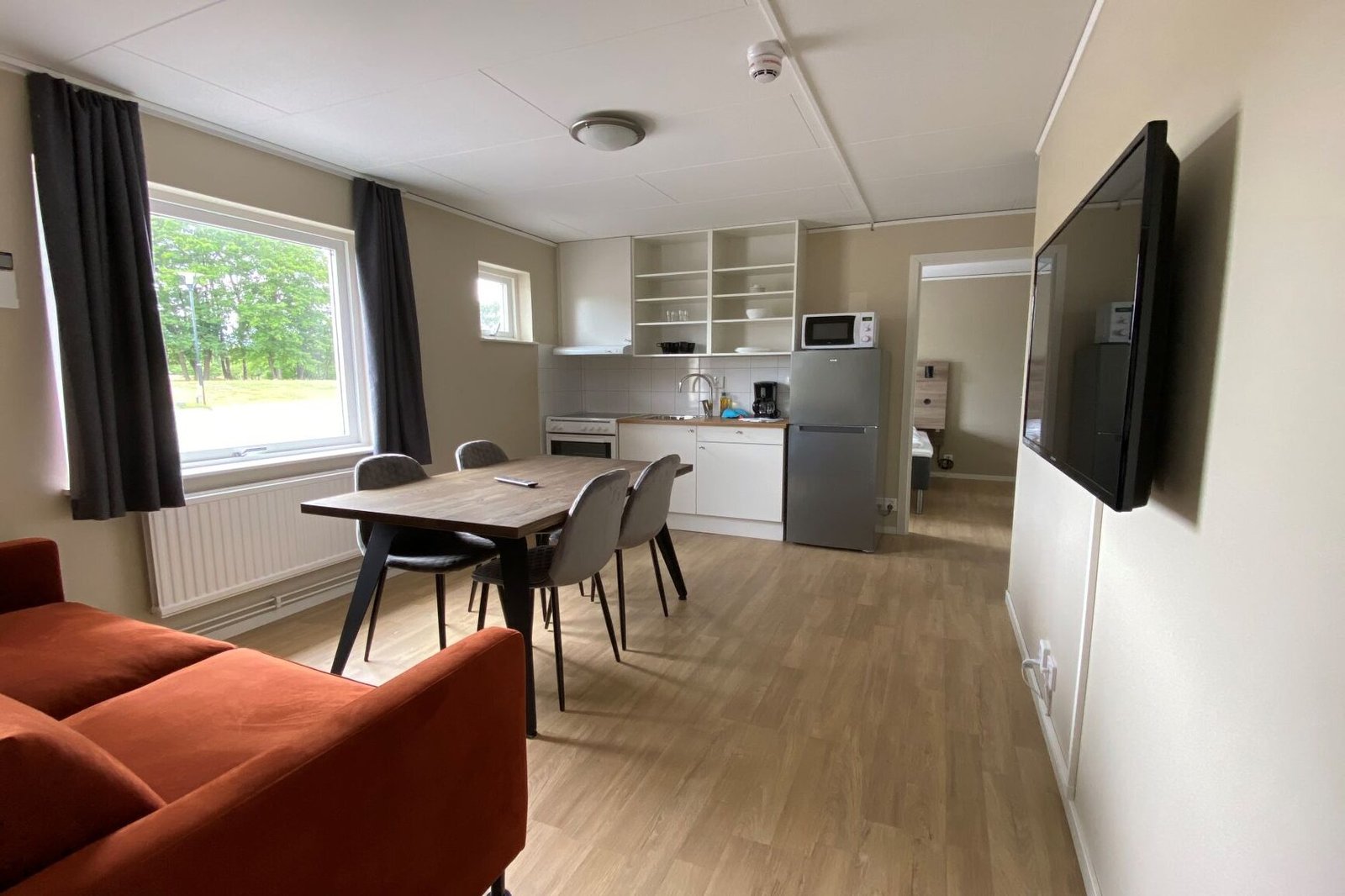
- Accommodation: You stay at the local hotel Vesterhavet in 4-6 bedded rooms with shower/WC and TV in the rooms. The hotel also has a lounge, billiard room, conference room with theory facilities and Wifi. The hotel is only 1 km from the training centre in Falkenberg.
- Training: All training takes place in Klitterbadet’s 50-metre indoor pool, which is Sweden’s only 50-metre saltwater pool. The pool in Falkenberg is 28 degrees centigrade.
- Price: on request, depending on dates, group size and room types
Why Swim Clubs Choose Falkenberg
Falkenberg has about 30,000 inhabitants, and everyone in town lives close to the sea. Its central location on the west coast makes it easy to reach by car, coach or train from much of Sweden, which keeps travel costs and travel days down.
The main attraction for swimmers is unique in the country: Klitterbadet has Sweden’s only 50-metre saltwater pool.
Training at Klitterbadet
All training takes place in Klitterbadet’s 50-metre indoor pool. Because it is indoors, the camp works regardless of the weather and the season, and the water temperature is a comfortable 28 degrees Celsius.
For clubs that train in 25-metre pools at home, a week in a 50-metre pool is an excellent way to work on pacing, stroke length and endurance before long-course competitions. Saltwater also gives a slightly different feel in the water, which many swimmers enjoy.
Accommodation at Hotel Vesterhavet
The group stays at the local Hotel Vesterhavet in rooms with four to six beds, shower and toilet, and a TV. The hotel has a lounge, a billiard room, a conference room that can be used for theory sessions, and Wi-Fi.
The hotel is only about one kilometre from the training centre, so swimmers can walk to and from the pool. Full board keeps meals simple and gives the group a regular routine.
Using the Theory Room
A conference room at the hotel is a real asset on a swim camp. Use it for video analysis of strokes filmed on deck, goal-setting workshops, or short talks about nutrition and recovery.
Theory sessions are also a good activity for the evening of a heavy training day, when swimmers need to rest their bodies but can still learn.
Budgeting and Booking Tips
A swim camp is a big investment for most clubs, so it pays to plan the budget early. Prices depend on travel dates, group size, room types and pool time, which is why most offers are given on request rather than as a fixed price.
- Book early to secure lane time and the best flight prices.
- Compare room options: larger shared rooms often reduce the cost per swimmer.
- Check exactly what full board includes and whether drinks are extra.
- Plan fundraising activities months ahead so that every swimmer can join.
- Ask about travel guarantees and insurance before paying a deposit.
Transparent planning keeps parents on board and makes it easier to repeat the camp next year.
Making the Most of Long-Course Training
For many clubs in northern Europe, the biggest benefit of a swim camp abroad is simply time in a 50-metre pool. Long-course water changes the rhythm of a set: fewer turns, more strokes per length and a much clearer picture of each swimmer’s pacing.
Use the camp to test pace over 50s, 100s and 200s, to film strokes from the deck, and to rehearse starts and finishes in race conditions. Swimmers who usually train short course often discover where their stroke breaks down in the second half of a length, which gives clear targets for the season.
Mix this with technique blocks and relay practice, and the camp becomes both a fitness boost and a learning experience.
How to Structure a Week at a Swim Camp
Most clubs get the best results from a camp when the week follows a clear rhythm rather than simply stacking up kilometres. A common pattern is two water sessions a day on the first three days, a lighter half-day in the middle of the week, and then another block of quality work before travel home.
- Day 1: an easy aerobic session after travel, focused on feel for the water and long-course turns.
- Days 2-3: a morning endurance set and an afternoon technique or kick session, plus short dryland work.
- Day 4: one session only, followed by team time, recovery and a group activity.
- Days 5-6: race-pace sets, starts and relays while swimmers are adapted to the pool.
- Final day: a short, sharp swim and a coach debrief before departure.
Keep a shared training log so that every swimmer can see their volume and the coach can adjust the load if fatigue builds up.
Setting Goals for Your Swim Camp
The clubs that get the most out of a training camp decide in advance what the week is for. Is it an aerobic base block early in the season, a technique camp for younger groups, or a sharpening week before a championship? The answer changes how every session is written.
Ask each swimmer to set one personal goal for the week, such as holding a stroke count over 50 metres, improving a turn or completing a key set. Write the goals down and review them on the last evening.
Clear goals also help parents understand why the programme looks the way it does, and they give younger swimmers a sense of progress that lasts long after the trip.
Recovery, Food and Sleep During Training Camps
Double sessions in a 50-metre pool are demanding, and the gains from a swim camp come only when swimmers recover between workouts. Full board makes this much easier, because the group eats at set times and nobody has to search for food after training.
Encourage swimmers to eat a real breakfast before the morning session, refuel within an hour after each swim, and drink water throughout the day, especially in warm climates. A short nap or quiet rest after lunch is worth more than an afternoon on the beach in full sun.
Sleep is the most underrated part of any training camp. Agree on a lights-out time, keep evening activities short, and plan the lighter day of the week so that the group can catch up on rest without losing momentum.
More Training Camps and Sports Camps
If you are comparing destinations, take a look at our overview of swim camps in Europe. Clubs that travel with several teams can also explore our football camps and other sports camps. Related guides:
- Swim Camp Slovakia: World-Class Training at X-Bionic Sphere
- Swim Camp Coral Bay: Private 50m Pool at Coral Beach Resort
- Swim Camp Costa del Sol: Hotel Cervantes in Torremolinos
Swim camp Falkenberg: Frequently Asked Questions
What is special about the pool in Falkenberg?
Klitterbadet has Sweden’s only 50-metre saltwater pool.
What is the water temperature?
The pool is kept at 28 degrees Celsius.
Where do we stay?
At Hotel Vesterhavet, about one kilometre from the pool, in 4-6 bed rooms.
Is there a room for theory sessions?
Yes, the hotel has a conference room with theory facilities.
Final Thoughts
A swim camp Falkenberg week gives your group the right mix of quality facilities, full board and a destination that athletes remember. Request a tailored offer with your dates and group size, and start planning a training camp that moves the whole club forward.