
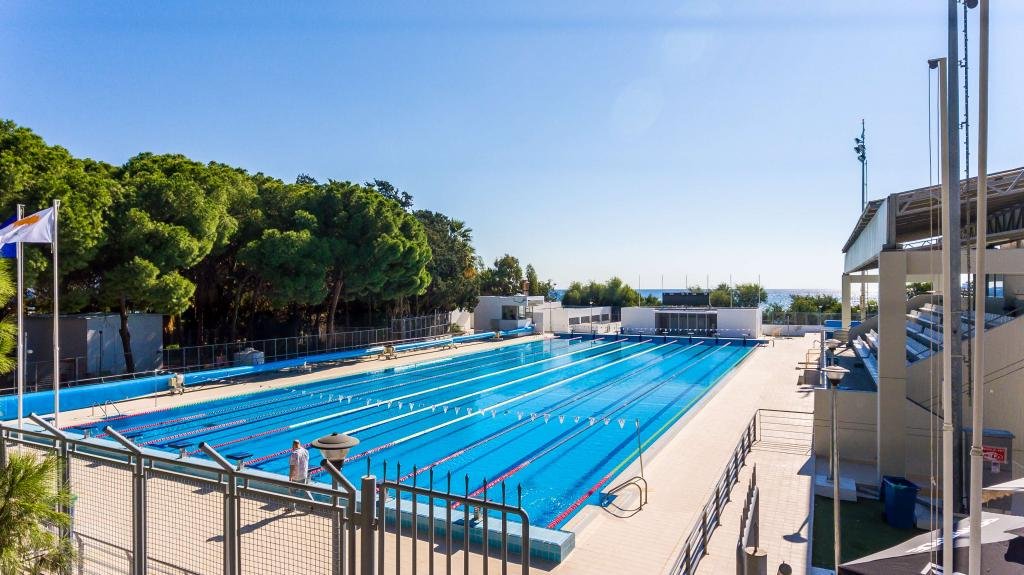
A swim camp Limassol trip combines Cypriot sunshine with an Olympic pool only 700 metres from your hotel. Limassol is the second largest city in Cyprus, with almost 200,000 inhabitants, and it is popular with clubs for its climate and beaches.
This guide covers the city, Harmony Bay Hotel and the training set-up.
Swim camp Limassol at a Glance
Here are the key facts for a swim camp Limassol trip, so you can compare it quickly with other training camps:
- Accommodation: 3-star hotel
- Training: 50 metre outdoor pool
- Meals: Full board
- Accommodation: Harmony Bay Hotel is a 3*** hotel in Limassol, just a stone’s throw from the sea. Rooms at the hotel offer sea views of the Mediterranean Sea. All rooms are equipped with a flat-screen satellite TV, a bathroom with toiletries, a hairdryer and a shower or bath.
- Training: Training takes place at the local Olympic swimming pool. The swimming pool is only 700 metres from the hotel.
- Price: on request, depending on dates, group size and room types
Why Choose a Swim Camp in Limassol?
Historically an important harbour town, Limassol has become a major visitor destination with a broad cultural life and many restaurants and hotels. For a training group, that means plenty to see while still having a calm base by the sea.
Cyprus also offers some of the most reliable weather in Europe for training outdoors in the colder months. Teams that travel between 1 October and 15 May for at least four nights may qualify for a training-camp subsidy, so check this when you plan.
Harmony Bay Hotel
The group stays at Harmony Bay Hotel, a hotel just a stone’s throw from the sea. Rooms offer views over the Mediterranean and are equipped with a flat-screen satellite TV, a bathroom with toiletries, a hairdryer and a shower or bath.
The hotel also has its own pool for cooling off between sessions, and the camp is arranged with full board.

Training at the Olympic Pool
Training takes place at the local Olympic swimming pool, only about 700 metres from the hotel. The short distance makes it easy to walk to both sessions each day and gives swimmers more time to rest.
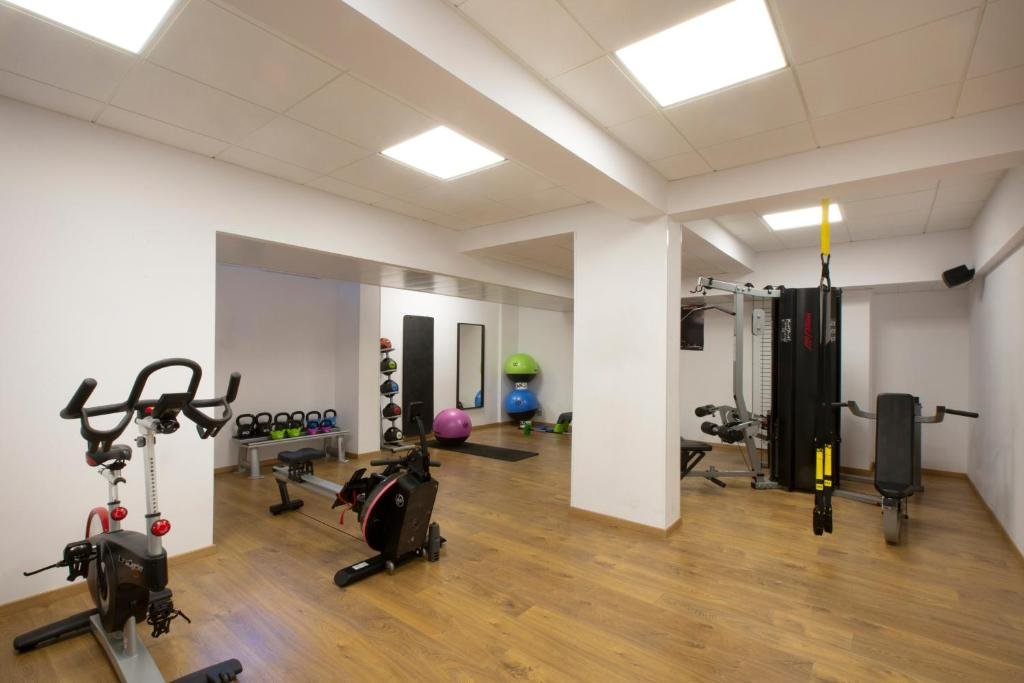
Use the long-course water for pacing work, stroke counting and race rehearsal, and combine with short dryland sessions at the hotel.
Exploring Limassol
The seafront and the old harbour area are ideal for a calm evening walk. On the lighter day of the week, a group lunch in town or a short sightseeing trip helps swimmers recharge before the final training block.
Making the Most of Long-Course Training
For many clubs in northern Europe, the biggest benefit of a swim camp abroad is simply time in a 50-metre pool. Long-course water changes the rhythm of a set: fewer turns, more strokes per length and a much clearer picture of each swimmer’s pacing.
Use the camp to test pace over 50s, 100s and 200s, to film strokes from the deck, and to rehearse starts and finishes in race conditions. Swimmers who usually train short course often discover where their stroke breaks down in the second half of a length, which gives clear targets for the season.
Mix this with technique blocks and relay practice, and the camp becomes both a fitness boost and a learning experience.
How to Structure a Week at a Swim Camp
Most clubs get the best results from a camp when the week follows a clear rhythm rather than simply stacking up kilometres. A common pattern is two water sessions a day on the first three days, a lighter half-day in the middle of the week, and then another block of quality work before travel home.
- Day 1: an easy aerobic session after travel, focused on feel for the water and long-course turns.
- Days 2-3: a morning endurance set and an afternoon technique or kick session, plus short dryland work.
- Day 4: one session only, followed by team time, recovery and a group activity.
- Days 5-6: race-pace sets, starts and relays while swimmers are adapted to the pool.
- Final day: a short, sharp swim and a coach debrief before departure.
Keep a shared training log so that every swimmer can see their volume and the coach can adjust the load if fatigue builds up.
Setting Goals for Your Swim Camp
The clubs that get the most out of a training camp decide in advance what the week is for. Is it an aerobic base block early in the season, a technique camp for younger groups, or a sharpening week before a championship? The answer changes how every session is written.
Ask each swimmer to set one personal goal for the week, such as holding a stroke count over 50 metres, improving a turn or completing a key set. Write the goals down and review them on the last evening.
Clear goals also help parents understand why the programme looks the way it does, and they give younger swimmers a sense of progress that lasts long after the trip.
Recovery, Food and Sleep During Training Camps
Double sessions in a 50-metre pool are demanding, and the gains from a swim camp come only when swimmers recover between workouts. Full board makes this much easier, because the group eats at set times and nobody has to search for food after training.
Encourage swimmers to eat a real breakfast before the morning session, refuel within an hour after each swim, and drink water throughout the day, especially in warm climates. A short nap or quiet rest after lunch is worth more than an afternoon on the beach in full sun.
Sleep is the most underrated part of any training camp. Agree on a lights-out time, keep evening activities short, and plan the lighter day of the week so that the group can catch up on rest without losing momentum.
Dryland Ideas That Need Little Equipment
Not every destination has a big gym, and you do not need one for useful dryland work. Short, focused sessions before or after the water keep swimmers strong and reduce the risk of shoulder problems.
- Activation with resistance bands before every swim: external rotations, pull-aparts and scapular work.
- Core circuits: planks, side planks, dead bugs and hollow holds.
- Mobility for thoracic spine, hips and ankles after the afternoon session.
- Light jumping and skipping for younger groups to build coordination.
Keep dryland to 20-30 minutes so it supports, rather than competes with, the water training.
More Training Camps and Sports Camps
If you are comparing destinations, take a look at our overview of swim camps in Europe. Clubs that travel with several teams can also explore our football camps and other sports camps. Related guides:
- Swim Camp Koper: Seaside 50m Pool on Slovenia’s Coast
- Swim Camp Mallorca: Best Swim Centre in Colonia de Sant Jordi
- Swim Camp La Cala de Mijas: New 50m Pool on the Costa del Sol
Swim camp Limassol: Frequently Asked Questions
How far is the pool from Harmony Bay Hotel?
About 700 metres.
Is the pool long course?
Yes, training takes place at the local Olympic swimming pool.
Do the rooms have sea views?
The rooms at Harmony Bay Hotel offer views of the Mediterranean.
Is there a training-camp subsidy in Cyprus?
Teams travelling 1 October-15 May for at least four nights may qualify. Ask when booking.
Final Thoughts
A swim camp Limassol week gives your group the right mix of quality facilities, full board and a destination that athletes remember. Request a tailored offer with your dates and group size, and start planning a training camp that moves the whole club forward.