
Football camps in Santarém let clubs enjoy Portuguese weather and football culture without the higher prices of the Algarve. Santarém sits on a plateau above the River Tagus in the Ribatejo region, about 80 kilometres north-east of Lisbon. Known as the capital of Portuguese Gothic architecture, it is a historic but unhurried town where teams can train in the sun and still experience authentic local life.
Portugal has produced some of the world’s finest players, and football is everywhere, from village pitches to televised matches in every café. Here is how to make the most of a week in Santarém.
Why Choose Football Camps in Santarém?
The key selling point is the climate. Spring arrives early in central Portugal, and from March to May daytime temperatures are often in the high teens to mid-twenties, perfect for training. That makes Santarém an attractive alternative for northern European clubs that want to escape cold and dark pitches before the season.
It is also accessible. Lisbon Airport is one of Europe’s busiest hubs, and Santarém is around an hour away by road or rail.
Travel and Transfers
Regional and intercity trains run from Lisbon’s Oriente station to Santarém in roughly an hour. The station is in the valley below the old town, so a coach transfer is usually more practical for groups with luggage. Hiring a coach for the whole week covers airport transfers, training trips and excursions, and it gives coaches control of the schedule.
Pitches and Facilities
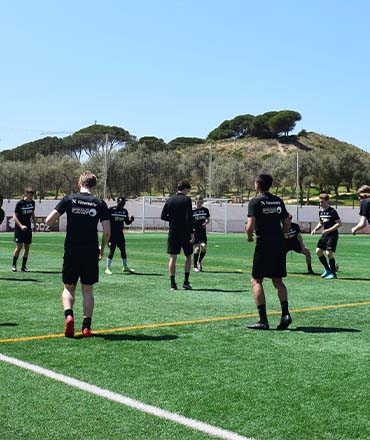
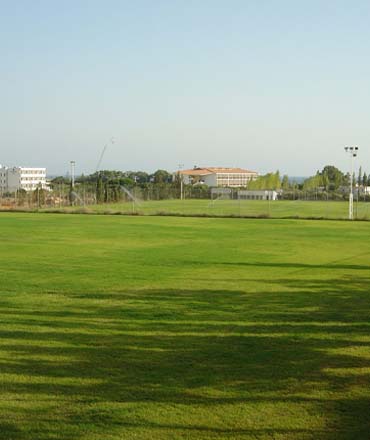
Municipal stadiums and club grounds in the Ribatejo region typically offer a mix of natural grass and artificial turf. Artificial pitches are common in Portugal and are in good condition at many venues, which is helpful in spring when grass may still be recovering. Check that changing rooms, showers and a meeting room are available, and ask about floodlight hours if you plan evening sessions. Compare options using the criteria on our football camps page.
A Sample Training Week
- Day 1: arrival, light activation and team meeting.
- Day 2: possession games and positional play.
- Day 3: defensive organisation and transitions.
- Day 4: half-day off with a cultural visit.
- Day 5: attacking patterns and finishing drills.
- Day 6: friendly match against a local side.
- Day 7: recovery session and departure.
Using the mild weather for two quality sessions a day is the main benefit of football camps in Santarém. Combined with good recovery, this kind of concentrated block is exactly what our article on why football camps are key for player development recommends.
Local Opponents and Football Culture
Portuguese youth teams are technical and comfortable in tight spaces, which makes them excellent opposition for visiting squads. Ask your local partner to arrange friendlies with clubs in Santarém or nearby towns such as Almeirim, Cartaxo or Torres Novas. Watching a lower-league match at the weekend is another way to soak up Portuguese football culture.
Training Load and Recovery at Football Camps in Santarém
Sunshine after a long winter can make players eager to do too much. Coaches should manage load carefully, especially in the first two days, when bodies are adjusting to firm pitches and warmer air. A simple method is to rate each session as light, medium or hard and never schedule two hard sessions in a row. Ask players to report how they feel each morning on a scale of one to ten, and adapt if several squad members report heavy legs.
Recovery tools need not be expensive. Stretching on the grass after training, a short swim in the hotel pool, foam rollers and enough sleep do most of the work. Plan a full afternoon off mid-week so that the final match is played with fresh legs.
Weather Considerations for Football Camps in Santarém
Spring and autumn are the sweet spots. In March and April, mornings can be cool and occasional rain fronts pass through, so pack a training jacket and a waterproof layer. From late May the inland heat builds quickly, and by July temperatures above 35 degrees are common in the Tagus valley, which is too hot for serious double sessions. October is another good window, with warm days, softer light and pitches recovering from the summer.
Keep an eye on the forecast each evening and be ready to swap morning and afternoon sessions if needed.
Accommodation and Food
Santarém has hotels in and around the historic centre, as well as guesthouses and rural estates, called quintas, in the surrounding countryside. Portuguese food suits athletes well: grilled fish and chicken, rice dishes, soups, salads and fresh fruit. Ribatejo is a farming region, so vegetables and bread are excellent. Agree meal times with your hotel so that lunch does not clash with afternoon training.
Things to Do in Santarém
The Portas do Sol garden, on the edge of the old town walls, offers wide views over the Tagus and the plains below, a great spot for a team photo. The town’s Gothic churches, including the Church of Graça, are impressive even for players who are not usually interested in history. Lisbon is close enough for a day trip to Belém, the riverside and a stadium tour, and Fátima and Tomar with its Templar castle are also within easy reach.
Budget and Practical Tips
Santarém is generally cheaper than coastal resorts. Portugal uses the euro, cards are widely accepted and tap water is safe to drink. Remember that dinner is often served later than in northern Europe, so confirm earlier times for younger players. Sun protection is important even in spring.
Planning Football Camps in Santarém With Young Players
For youth squads, supervision and routine matter most. Use a buddy system, fixed meeting points and clear rules for free time. Share a daily schedule with parents and post updates on a team group chat. Our guide on how to plan group travel for sports teams offers a full checklist covering insurance, rooming and safety.
Final Thoughts
Santarém combines spring sunshine, solid facilities, Portuguese football culture and genuine history in one compact package. For clubs that want quality pre-season or Easter training close to Lisbon, football camps in Santarém are well worth considering.