
When northern Europe is dark and frozen, the Region of Murcia often enjoys more than 300 days of sunshine a year. That reputation has made football camps in Murcia popular with clubs from Scandinavia, Germany, the Netherlands and the UK, including professional teams looking for warm-weather preparation in January and February. The region, in south-east Spain between Andalusia and Valencia, combines a lively regional capital with a coastline on the Mediterranean and the Mar Menor lagoon.
The city of Murcia itself is a historic university city with a baroque cathedral, while the coast has several sports resorts built specifically for training camps.
Murcia at a Glance
- Airport: Región de Murcia International Airport at Corvera, about 25 minutes from the city; Alicante Airport is about an hour away.
- Winter temperatures: typically 15 to 20 degrees by day.
- Facilities: sports resorts with multiple grass pitches, gyms and hotels.
- Football: Real Murcia and FC Cartagena, plus many amateur clubs.
Why Football Camps in Murcia Are So Popular
The climate is the main reason. Winter days are mild and dry, rain is rare and pitches remain playable all season. For clubs in northern Europe whose leagues restart in spring, a week in Murcia in January, February or March provides ideal preparation.
The infrastructure is the second reason. Several resorts in the region offer full packages: multiple pitches, accommodation, meals, gyms, pools and meeting rooms, all on one site. That reduces transfers and allows coaches to focus completely on training.
Getting There
Murcia’s international airport at Corvera has connections with many European cities, especially in winter. Alicante Airport, one of Spain’s busiest, offers even more routes and is about an hour away by coach. Many resorts arrange transfers as part of a package. Within the region, a private coach is the best option for excursions.
Facilities for Football Camps in Murcia
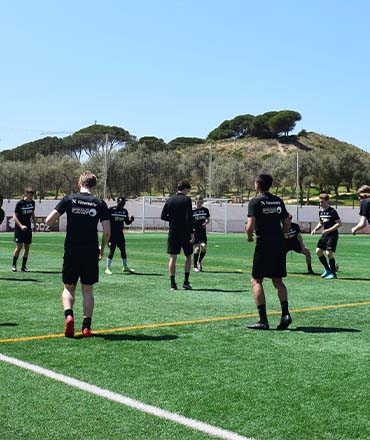
Expect high-quality natural grass pitches at dedicated sports resorts, often maintained to professional standards. Artificial pitches are also available at municipal complexes. Many resorts include gyms, recovery pools, physiotherapy rooms and video analysis spaces. Book early for January and February, which are peak months for professional and semi-professional teams. Check whether your package guarantees exclusive use of a pitch for each session or whether it may be shared, and ask how pitches are allocated when many teams are on site at once.
For a wider comparison of Spanish regions, see our complete guide to football training camps in Spain.
Seasons and Timing
- January to March: peak season for winter training, mild and sunny.
- April to May: warm and ideal for spring camps, with temperatures up to 25 degrees.
- June to September: very hot, often above 35 degrees inland, not ideal for training.
- October to December: pleasant, with occasional heavy rain in autumn.
Most clubs choose January to April.
A Winter Training Week
Arrival and adaptation
Light sessions on day one and two, focusing on technique and mobility as players adjust from cold climates to firm, sunny pitches.
Building intensity
Days three to five raise the intensity with pressing games, tactical work and conditioning. Two sessions a day are realistic in winter.
Competition
Friendly matches against other visiting clubs or local teams. In peak season, resorts often host many teams, which makes it easy to arrange games against international opponents.
Friendly Matches at Football Camps in Murcia
One advantage of the region in winter is the number of visiting teams. Resorts often coordinate friendlies between clubs from different countries, giving players experience against new styles of play. Local Spanish teams are also available through partners. Agree match format, substitutions and refereeing in advance.
Recovery and Wellbeing
Winter sun can be deceptive. Players coming from cold climates should use sunscreen and drink plenty of water. Recovery pools, stretching sessions and walks along the coast help legs recover. Sleep is crucial; agree on lights-out times. Our article on why football camps are key for player development explains how balanced training and recovery accelerate progress.
Food and Accommodation
Murcia is known as the orchard of Europe, and its fruit and vegetables are excellent, from lemons and oranges to tomatoes and peppers grown in the fertile Segura valley. Typical dishes include zarangollo, a courgette and egg dish, rice dishes, grilled fish and fresh salads. Resort hotels usually offer buffets with athlete-friendly options. In the city, tapas bars and restaurants are good value.
Excursions in the Region
The city of Murcia has a beautiful cathedral, the Casino with its ornate rooms and the Segura river promenade. Cartagena, with its Roman theatre and naval history, is about 45 minutes away, and its harbour boat tours are a relaxed way to spend a recovery afternoon. The Mar Menor, a large saltwater lagoon, has calm, warm water and beaches, and the Calblanque natural park offers wild coastline. For a coastal city break, our Alicante travel guide covers the neighbouring province.
Budget Considerations for Football Camps in Murcia
Murcia offers good value, especially compared with the Costa del Sol or Mallorca. All-inclusive resort packages make budgeting simple. Book early for peak winter months, as the best resorts fill quickly. Spain uses the euro, and cards are widely accepted.
Practical Tips
Pack layers: winter mornings and evenings can be cool, around 5 to 10 degrees, even when afternoons are warm. Bring both firm-ground and artificial-ground boots. Spanish meal times are late, but resorts usually adapt for teams.
Plan the last day carefully. Flights from Corvera and Alicante can be busy in peak season, so allow plenty of time for check-in with kit bags. A short morning session, an early lunch and a relaxed transfer keep the final day calm. Before departure, hold a brief review with the squad: what did they learn, what did they enjoy and what should be improved next time? Their answers help coaches plan the following season’s camp and give players a sense of ownership.
Final Thoughts
Sunshine, professional-standard facilities and good value make football camps in Murcia one of the best options in Europe for winter and spring training. For clubs escaping cold, dark pitches, Murcia is hard to beat.