
An athletic camp Vilamoura trip takes your group to one of the Algarve’s most popular destinations, with a stadium for all events just one kilometre from the hotel. Vilamoura is known for its beautiful beaches and large marina.
This guide covers the area, the aparthotel and the stadium.
Athletic camp Vilamoura at a Glance
Here are the key facts for a athletic camp Vilamoura trip, so you can compare it quickly with other training camps:
- Accommodation: 4-star aparthotel
- Training: Athletics centre
- Meals: Full board
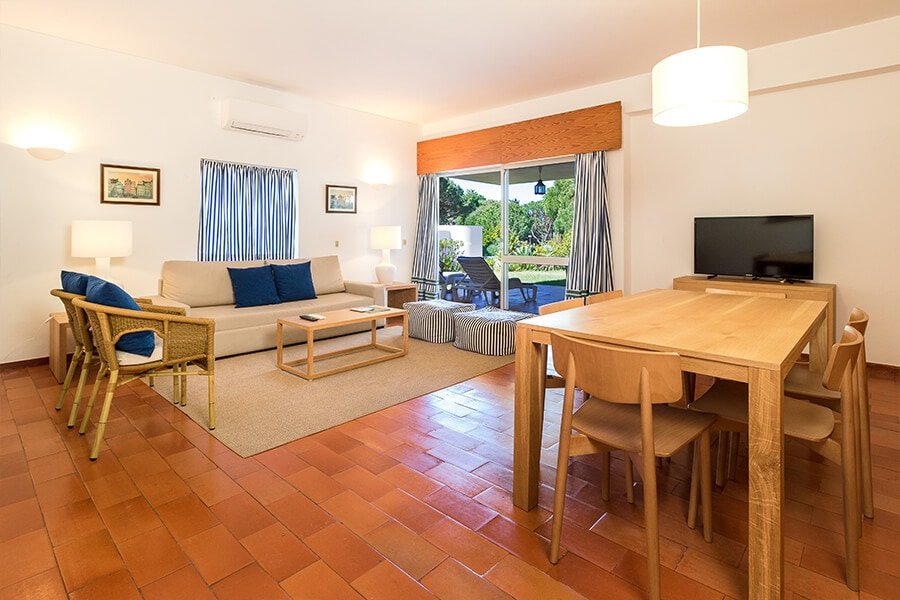
- Accommodation: Accommodation is provided at the 4**** aparthotel Pinhal da Marina. There are different sizes of apartments to choose from. All apartments are equipped with a private bathroom and a small kitchen, they also have views of the pool or the garden.
- Training: Training takes place at the local athletics stadium Quarteira
- Price: on request, depending on dates, group size and room types
Why Vilamoura?
Vilamoura offers water sports such as water skiing, diving, windsurfing and sailing, and boat excursions along the Algarve coast. For the culturally curious, the Roman ruins of Cerro da Vila lie behind the marina.
Vilamoura Beach is known for its warm water and golden sand and holds a Blue Flag for environmental quality.
Pinhal da Marina Aparthotel
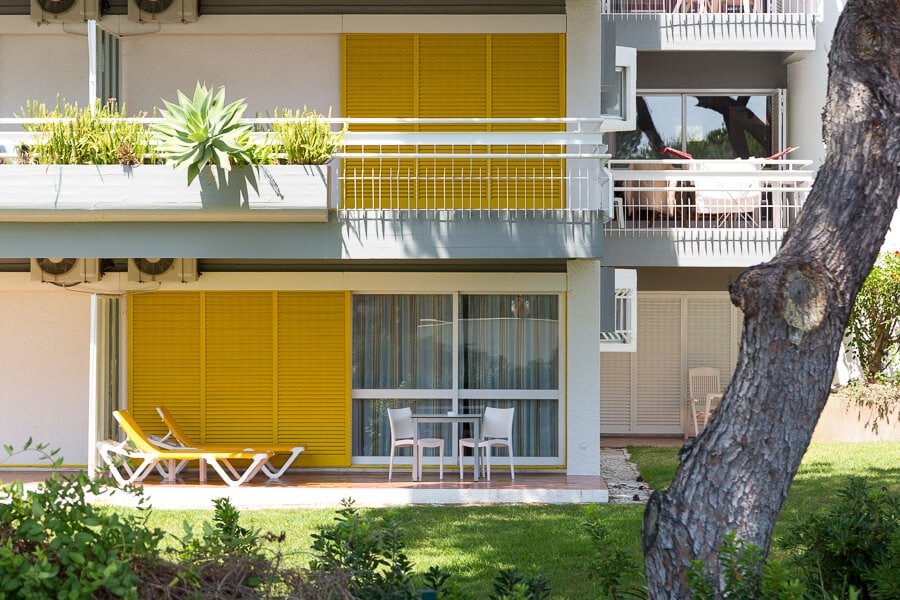
Accommodation is at the four-star aparthotel Pinhal da Marina, with apartments in different sizes. All apartments have a private bathroom and a small kitchen, with views of the pool or garden.
The hotel has two swimming pools, a tennis court and a lovely garden with pine trees. All meals are served at the buffet restaurant with full board, and the harbour and beach are about 15 minutes’ walk away.
Training at Quarteira Municipal Stadium
Training takes place at the Quarteira Municipal Stadium, about one kilometre from the hotel. All events can be practised there, which makes Vilamoura a good fit for mixed groups.
The short distance allows the group to walk or jog to the stadium as part of the warm-up.
Free Time at the Marina
A walk around the marina or a short boat trip is a relaxing activity for the lighter day. Keep water sports for the end of camp so legs stay fresh for training.
Recovery and Nutrition at an Athletic Camp
Two sessions a day on a fast track puts real stress on muscles and tendons, and athletes who are not used to the volume can pick up small injuries quickly. That is why recovery should be planned with the same care as the sessions themselves.
Full board helps a lot: the group eats at regular times and the coach can make sure that athletes refuel after training. Encourage a proper breakfast, a snack and water straight after each session, and a balanced dinner with carbohydrates and protein.
Build in mobility, easy jogging and stretching on the lighter day, and protect sleep with a fixed lights-out time. A rested athlete gets far more out of the last days of camp than a tired one.
Event Groups and Session Design
Mixed athletics groups need careful planning, because sprinters, jumpers, throwers and endurance runners all have different needs. A simple solution is to share the warm-up and drills, then split into event groups for the main part of the session.
- Sprints and hurdles: acceleration, rhythm and short speed work with full recovery.
- Jumps: approach runs, take-off drills and short runway jumps.
- Throws: technical drills, standing throws and full throws when facilities allow.
- Endurance: tempo runs, intervals and easy runs on varied terrain.
End with a shared cool-down so the whole group finishes together.

Why Warm-Weather Training Works
For clubs from northern Europe, the main reason to travel is simple: training outdoors in warmth during months when the track at home is cold, wet or covered in snow. Warm muscles tolerate speed work better, technical sessions can run longer, and athletes can practise in spikes instead of trainers.
A week of focused outdoor training also gives a clear picture of each athlete’s form. Coaches can test sprint times, approach runs and throwing distances in good conditions, and use the results to plan the rest of the season.
The change of environment also refreshes motivation. Athletes return home with new energy and a clearer sense of purpose.
Injury Prevention on Camp
A sudden increase in training volume is the most common cause of small injuries on athletics camps. Athletes go from cold-weather training at home to fast tracks, warm weather and two sessions a day.
Build volume gradually over the first two days, include thorough warm-ups with mobility and drills, and limit the number of maximal sprints and jumps. Encourage athletes to report niggles early so the coach can adjust the plan.
Plenty of water, good sleep and sensible footwear on hard surfaces go a long way to keeping everyone healthy until the last session.
Building Team Spirit on Training Camps
Athletics is often an individual sport, but a training camp turns a club into a team. Sprinters, jumpers, throwers and distance runners share meals, rooms and long days at the track, and they learn to support each other’s events.
Plan a few short activities that add to the week without taking energy away from training: a walk through the town, a beach visit on the light day, a quiz evening or a mixed relay at the end of camp. Older athletes can take responsibility for younger ones, which builds leadership.
Those shared memories often keep young athletes in the sport for years.
How to Plan a Week at an Athletic Camp
A successful athletic camp balances quality and recovery. Most groups work well with two sessions a day for the first part of the week, a lighter day in the middle, and a final block of specific work before the trip home.
- Day 1: a gentle session to wake up the legs after travel, with drills and strides.
- Days 2-3: technical work in the morning for jumpers, throwers and sprinters, and aerobic or circuit work in the afternoon.
- Day 4: one session only, followed by rest, mobility and a group activity.
- Days 5-6: event-specific quality: speed, approach runs, throws in full and tempo runs.
- Final day: a short session, testing or a fun relay, followed by a debrief.
Write the plan on a shared sheet so that athletes, parents and coaches all know what to expect.
Setting Goals for the Training Camp
Before the trip, decide what the camp should achieve. An early-season camp might focus on volume and technique, while a spring camp just before competitions can include more speed and event-specific quality.
Ask every athlete to set one or two personal targets for the week: a technical cue in the long jump approach, a consistent rhythm over hurdles, or a set of tempo runs at a given pace. Review them halfway through and again on the last day.
Clear goals keep the group focused and make it easier to measure whether the camp was a success.
More Training Camps and Sports Camps
If you are comparing destinations, take a look at our overview of athletic camps in Europe. Clubs that travel with several teams can also explore our football camps and other sports camps. Related guides:
- Athletic Camp Albufeira: New Tartan Track on the Algarve
- Athletic Camp Alfamar: The Algarve’s Largest Sports Resort
- Athletic Camp Cyprus: Aliathon Resort and Geroskipou Stadium
Athletic camp Vilamoura: Frequently Asked Questions
Can all events be trained in Vilamoura?
Yes, all events can be practised at Quarteira Municipal Stadium.
How far is the stadium from the hotel?
About one kilometre.
What is the accommodation?
The four-star aparthotel Pinhal da Marina with apartments and two pools.
Is the beach close?
The harbour and beach are about a 15-minute walk away.
Final Thoughts
A athletic camp Vilamoura week gives your group the right mix of quality facilities, full board and a destination that athletes remember. Request a tailored offer with your dates and group size, and start planning a training camp that moves the whole club forward.